
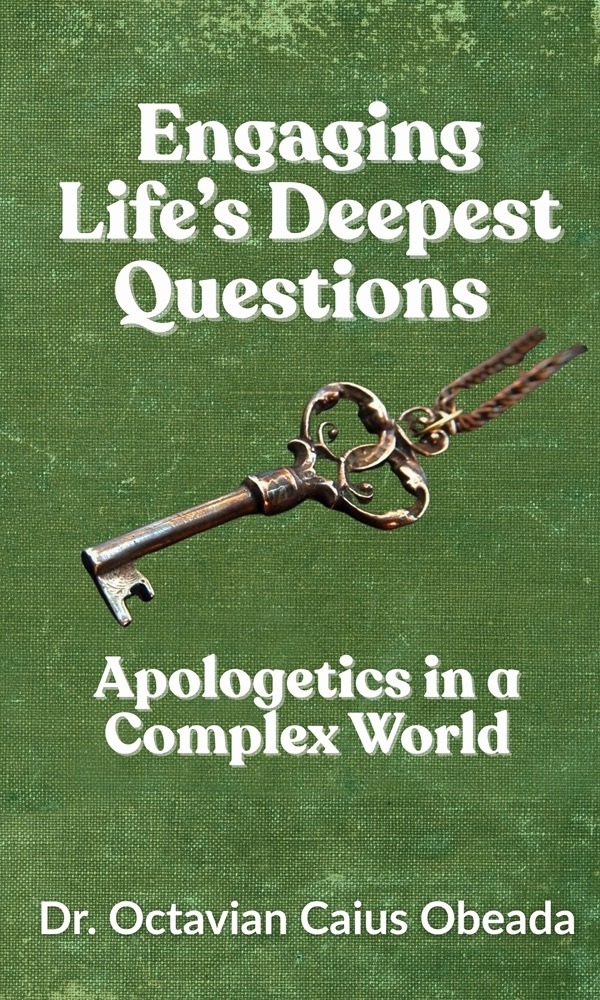
This book is also available in  Romanian language in eBook format at GoogleBooks as well as AppleBooks.
Preface
Introduction
Chapter 1: Introduction – Faith and the Big Questions
Apologetics and the Crucible of Tough Questions
Apologetics and Spiritual Formation
Apologetics in the Face of Contemporary Challenges
Apologetics as a Lifeline of Faith and Witness
Chapter 2: The Nature of Truth – Can We Know Anything for Certain?
Apologetics and Its Role: Navigating the Questions of Truth
Apologetics and Its Role in a Postmodern World
Apologetics and Its Role: The Christian Claim of Objective Truth in Christ
Embracing the Search for Truth
Chapter 3: God and Human Freedom – The Mystery of Choice and Responsibility
Human Freedom and Moral Responsibility
Reconciling Divine Sovereignty and Human Freedom
Understanding Divine Sovereignty and Human Freedom
A Reconciliation of Sovereignty and Freedom
Apologetics: Articulating Coherent Theology
Practical Implications for Believers
A Unified Response Beyond Denominational Divides
Chapter 4: Faith and Reason – Are They Compatible?
Understanding Apologetics
Faith and Reason: A Harmonious Relationship
Addressing the Misconception of Blind Faith
Apologetics in Practice
The Role of Apologetics in Contemporary Christianity
Defining Apologetics and Its Role: A Final Word
Biblical Faith as Trust Grounded in Evidence and Reason
Defining Apologetics: Wisdom from the Christian Heritage
The Role of Apologetics Today
Chapter 5: The Problem of Divine Command – Is God’s Morality Arbitrary?
Wrestling with the Euthyphro Dilemma
Divine Goodness and Moral Objectivity
Christian Responses and Clarifications
Embodied Apologetics: A Practical Summary
Apologetics as a Way of Life
Why this matters
Hopeful Clarity in a Complex World
Chapter 6: Christianity and Gender Issues – Faith, Identity, and Culture
Christianity and Gender Issues
Biblical Views on Gender and Human Dignity
Navigating Compassion and Conviction
Apologetic Response to the Freedom to Self-Define Gender Identity
Chapter 7: Christianity and Environmental Ethics – Does God Care for Creation?
God’s Care for Creation
Balance of Environmental Responsibility and Human Needs
Conversations Around Environmentalism and Faith
Chapter 8: Christianity and Violence – What About Crusades and Inquisitions?
Apologetics and the Confrontation with Religious Violence
What lessons emerge from this history?
Distinguishing Cultural from Biblical Christianity
Apologetic Responses and Lessons Learned
Chapter 9: Faith in an Age of Technology – Does God Matter in a Digital World?
Embracing Presence and Spiritual Integrity in the Digital Age
Faith in an Age of Technology
Faithful Witness in a Digital Age
Chapter 10: Christianity and the Problem of Hypocrisy
Church Scandals and the Charge of Hypocrisy
Historical Cases of Hypocrisy in the Christian Church
Biblical Realism About Human Sin and Failure
Responding to Hypocrisy While Affirming the Truth of the Faith
Chapter 11: Christianity and Social Justice – A Source of Oppression or Liberation?
Christianity and Social Justice: A Sacred Intersection
Critiques of Christianity as Patriarchal or Oppressive
Understanding the Concept and Its Theological Connection
Justice and Compassion in the Biblical Narrative
Engaging Social Justice Debates Apologetically
Chapter 12: Christianity and the Afterlife – What Happens When We Die?
Near-Death Experiences and Afterlife Claims
Heaven, Hell, and the New Creation
Eternal Ends and Present Ethics
An Apologetic Response to Christianity and the Afterlife
Chapter 13: Christianity and Other Religions – Is Jesus Unique?
Christ and the Many Voices
Encountering the World Through Different Lenses
Cultivating Respectful Engagement with Other Faiths
Chapter 14: Integrating Apologetics and Spiritual Formation
From Argument to Awakening
Building Your Personal Apologetics Toolbox
Engaging Apologetic Questions with Humility, Love, and Confidence
Cited or Recommended Literature
“Apologetics is not to be seen as a defensive and hostile reaction against the world, but as a welcome opportunity to exhibit, celebrate, and display the treasure … of the Christian faith.”
— Alister E. Mc Grath, Mere Apologetics
“Apologetics is most powerful when it listens before it speaks.”
— Dr. Octavian C. Obeada, Engaging Life’s Deepest Questions
“Our moral obligations are not burdensome impositions but expressions of a reality in which we are invited to participate.”
— John M. Frame, The Doctrine of the Christian Life
“The first task of love is to listen.”
— Henri J. M. Nouwen, Out of Solitude
“A robust apologetic does not fear the tough questions but welcomes them as opportunities for growth.”
— William Lane Craig, A Reasonable Response
Teacher’s Guide Overview
The Teacher’s Guide for Engaging Life’s Deepest Questions is a thoughtfully designed companion manual aimed at equipping educators to teach apologetics with clarity, compassion, and spiritual depth. Its purpose is to empower instructors not only to deliver theological and philosophical content but to form students in discernment, empathy, and Christian conviction.
This guide provides:
– Clear instructional support through chapter objectives, key concepts, and thematic outlines;
– Engaging classroom tools including thought-provoking discussion questions, creative exercises, formative and summative assessments;
– Practical teaching strategies for navigating sensitive cultural issues with pastoral wisdom and theological integrity.
More than a lesson planner, this guide serves as a resource for nurturing students toward a resilient and reasoned faith in today’s complex world. Whether used in classrooms, church groups, or mentoring settings, it enables teachers to confidently guide others into meaningful conversations about truth, identity, morality, and belief—rooted in the hope of the gospel.
The Teacher’s Guide is available in Paperback as well as Kindle format.
The Student’s Guide to Engaging Life’s Deepest Questions: Apologetics in a Complex World is an academically structured resource designed to equip students with the tools necessary for thoughtful and faithful engagement with today’s cultural and philosophical challenges.
Developed for use in both academic and ministry settings, the guide offers:
– Clear learning objectives and key concepts for each chapter
– Guided reflection questions that encourage personal and intellectual growth
– Practical applications to connect apologetics with real-world issues
– Biblical and theological foundations for responding to skepticism
– Culturally informed analysis of contemporary moral and existential questions
This manual is designed not merely to inform but to form students, helping them develop clarity, discernment, and confidence as they explore and defend the Christian worldview in an increasingly complex and pluralistic society.
The Student’s Guide is available in Paperback as well as Kindle format.