by Dr. Octavian Caius Obeada
Abstract: The fine-tuning of the universe refers to the extraordinary precision of physical constants and laws that enable the existence of life. Tracing its roots to ancient Greek philosophy, through medieval theology, and into modern cosmology, this concept has inspired profound scientific, philosophical, and theological inquiry. Key developments include the work of Thomas Aquinas, who framed teleological arguments for divine design, and Isaac Newton, whose laws of motion revealed cosmic order. In the 20th century, discoveries such as the Big Bang, the cosmological constant, and stellar nucleosynthesis highlighted the delicate balance required for a life-permitting universe. Contemporary debates center on naturalistic explanations, such as the multiverse hypothesis, versus theistic interpretations emphasizing intelligent design. Fine-tuning underscores the interdisciplinary nature of cosmic inquiry, bridging science and metaphysics. Whether interpreted as evidence of chance, necessity, or design, fine-tuning invites reflection on the origins, purpose, and extraordinary precision of the cosmos.
Ancient Greek philosophers, grappling deeply with concepts of order, purpose, and the structure of the cosmos, profoundly reflected on the roots of the fine-tuning argument. Living in an age when the mysteries of the natural world were both captivating and enigmatic, these early thinkers sought to explain the apparent harmony and regularity they observed in the universe. Although they lacked the scientific language of constants, parameters, and mathematical precision that modern cosmology employs, their insights founded a framework for the idea that the universe is finely arranged, suggesting intentionality and rational design.
One of the earliest proponents of this view was Anaxagoras (500–428 BCE), who introduced the concept of Nous (Mind) as the organizing principle of the cosmos. Anaxagoras proposed that the chaotic and indeterminate elements of the universe were brought into order by a purposeful and rational mind. This idea of an intelligent force structuring the universe prefigures later discussions of design and teleology, as it emphasized that the cosmos’ arrangement was neither random nor purely mechanistic but governed by a higher intelligence.[1]
The philosophical reflections of Plato (427–347 BCE) further developed this notion of a purposeful cosmos. In his dialogue, Timaeus, Plato described the universe as the product of a divine craftsman, or Demiurge, who fashioned the cosmos in accordance with eternal forms or ideals. Plato’s Demiurge did not create the universe from nothing but organized pre-existing chaotic matter into a harmonious and intelligible system. This act of divine craftsmanship imbued the cosmos with order and purpose, reflecting the rationality and goodness of its creator. For Plato, the universe’s structure was not merely functional but inherently meaningful, aligning with his broader philosophical vision that emphasized the relationship between reason, purpose, and ultimate reality.[2]
Aristotle (384–322 BCE), a student of Plato, offered a complementary perspective, focusing on the intrinsic purpose and direction of natural phenomena. His concept of final causes (telos) argued that everything in nature exists for a purpose or an end. For example, the acorn’s inherent purpose is to grow into an oak tree, and the natural world operates within this framework of directedness. In his work, Metaphysics, Aristotle posited the existence of a Prime Mover, an uncaused cause that initiates motion and order in the universe without itself being moved. While Aristotle’s Prime Mover is an impersonal force, its role as the ultimate source of order and rationality in the cosmos underscores the philosophical groundwork for later fine-tuning arguments.[3]
These ancient Greek reflections shared a common theme: the cosmos was not chaotic or arbitrary, but imbued with a sense of purpose, harmony, and order that pointed to something greater than itself. The interplay of ideas from thinkers like Anaxagoras, Plato, and Aristotle created a philosophical tradition that would resonate through centuries of intellectual history, influencing medieval theologians, natural philosophers of the Enlightenment, and eventually modern cosmologists. Their efforts to explain the structure and purpose of the universe set the stage for the fine-tuning argument, which continues to explore the profound question of why the cosmos appears so uniquely and precisely suited for life.
The medieval period was a time of profound intellectual growth, characterized by the integration of classical philosophy and Christian theology. This synthesis not only enriched medieval thought but also laid the foundation for later discussions about the order and purpose of the cosmos, which modern times would eventually frame as the fine-tuning argument. Among the most influential contributors to this intellectual tradition was Thomas Aquinas (1225–1274), a towering figure of medieval scholasticism whose theological and philosophical insights profoundly shaped the discourse on divine design.
Through his systematic exploration of order, purpose, and causality in the universe, Aquinas developed ideas that resonate deeply with contemporary discussions of fine-tuning, even though the scientific precision of constants and parameters was centuries beyond his time. His works represent a bridge between ancient philosophy, particularly the ideas of Aristotle and Plato, and modern explorations of the cosmos’ extraordinary precision.[4]
Thomas Aquinas’s intellectual project was, in large part, a response to the challenge of reconciling the rediscovered works of Aristotle with the Christian worldview. In the high medieval period, the reintroduction of Aristotelian philosophy into Western thought presented both opportunities and challenges for Christian theologians. Aristotle’s naturalistic explanations of the world and his emphasis on rationality were seen as tools to deepen the understanding of God’s creation, but they also required careful integration with the doctrines of the faith.[5]
Aquinas undertook this task with rigor, creating a synthesis that united reason and revelation. His magnum opus, the Summa Theologica, epitomizes this synthesis, offering a comprehensive theological system that draws heavily on Aristotelian philosophy while firmly rooted in Christian doctrine. Within this work, Aquinas articulated his famous Five Ways, five arguments for the existence of God. Among these, the Fifth Way, often called the Teleological Argument, is especially relevant to discussions about the order and purpose of the cosmos (Summa Theologica, Part I, Q.2, Article 3).
In the Fifth Way, Aquinas observed that natural objects, which lack intelligence, consistently act in regular and predictable ways to achieve specific ends. For example, celestial bodies move in fixed patterns, biological systems sustain life through complex interactions, and inanimate objects, such as rivers, flow in ways that contribute to larger ecological systems. Aquinas argued that an intelligent being, much like an archer guiding an arrow to its target, must direct such regularity and purpose, because they could not arise from chance.[6]
Aquinas’s argument does not rely on specific examples of biological complexity, as later thinkers like William Paley would do, but rather on the consistent behavior of natural phenomena. He saw the regularity in the cosmos as a reflection of divine governance, suggesting that God actively sustains and directs the universe toward its intended purposes (Summa Contra Gentiles, Book I, Chapter 13).[7]
Aquinas’s Teleological Argument draws heavily upon the Aristotelian concept of final causes, or telos. Aristotle (384–322 BCE) posited that everything in nature has an inherent purpose or goal, from the growth of plants to the movement of the stars. For Aristotle, this teleological structure was a fundamental aspect of reality, providing a framework to explain why things are the way they are.
Aquinas adopted and expanded this concept, arguing that the natural world’s purposefulness ultimately points to a divine Creator. In his view, the universe’s design reflects not only God’s power but also His wisdom and goodness. This theological framework imbued the cosmos with meaning and order, reinforcing the idea that nature reveals God’s nature and intentions. As Aquinas wrote in Summa Contra Gentiles, the order of creation serves as a testament to the Creator’s rationality and benevolence (Book I, Chapter 13).
Although Aquinas’s Teleological Argument does not explicitly address the fine-tuning of physical constants in the modern sense, it introduces key concepts, such as regularity, order, and purpose, that align with contemporary discussions of the universe’s extraordinary precision. For Aquinas, the observable consistency in natural phenomena was not merely a feature of the world but evidence of divine intention.[8]
Consider the movement of celestial bodies, which Aquinas used as an example in his arguments. The regular orbits of planets and the predictability of astronomical phenomena were, for him, clear indications of a guiding intelligence. In modern cosmology, such regularity has evolved into a deeper understanding of the physical laws and constants that govern the universe, such as the gravitational constant or the cosmological constant. These discoveries align with Aquinas’s broader theological framework, even if the specific scientific details were unknown to him.
Aquinas’s intellectual achievements extended beyond his own time. His synthesis of Aristotelian philosophy and Christian theology represented a monumental intellectual achievement of the medieval period, enabling later thinkers to build on his insights when grappling with the apparent fine-tuning of the cosmos. For example:
- Natural Theology Movement: Aquinas’s emphasis on the rationality and order of creation inspired the natural theology movement, which sought to understand God through the study of nature. This tradition flourished during the Enlightenment and beyond, influencing figures like William Paley and Isaac Newton.[9]
- Scientific Inquiry: The observation of regularity in nature prefigured the scientific revolution’s focus on uncovering natural laws. The teleological perspective reinforced the idea that the universe’s structure serves specific purposes, aligning with modern notions of fine-tuning.[10]
Although Aquinas lived long before the discoveries of modern cosmology, his theological framework remains relevant. By grounding the order and purpose of the cosmos in the nature of God, Aquinas anticipated arguments that would emerge with the advent of scientific precision in understanding the universe. Aquinas’ articulated principles extend to the fine-tuning of physical constants, such as the strength of gravity or the cosmological constant.
The medieval theological development of fine-tuning, particularly through the work of Thomas Aquinas, represents a critical link between ancient philosophical insights and modern scientific discussions. Aquinas’s Teleological Argument underscored the regularity and purpose evident in nature, attributing this order to a divine designer. While not addressing the fine-tuning of physical constants as understood today, his reflections established a conceptual foundation for future explorations of the cosmos’s extraordinary precision.
Through his synthesis of classical philosophy and Christian theology, Aquinas provided a robust framework for understanding the universe as a finely ordered and purposeful creation. His legacy continues to inspire debates about the origins and nature of the cosmos, demonstrating the enduring relevance of medieval thought in the modern quest to understand the universe’s remarkable design.
The Scientific Revolution (16th–18th centuries) marked a pivotal moment in the history of human thought, fundamentally altering humanity’s understanding of the natural world. During this transformative period, thinkers sought to uncover the laws governing the cosmos, replacing medieval notions of an Earth-centered universe with new paradigms based on observation, experimentation, and mathematical reasoning. This era’s discoveries revealed extraordinary precision and order in the cosmos, fueling speculation about its origins and purpose, even though the concept of fine-tuning, as we understand it today, remained unarticulated. A key part of this major shift in thinking was Nicolaus Copernicus’s (1473–1543) new way of looking at the universe, where the sun is at the center, which changed how we understand space.
Nicolaus Copernicus, a Polish astronomer and mathematician, initiated a profound shift in the understanding of the universe with the publication of his seminal work, De revolutionibus orbium coelestium (On the Revolutions of the Heavenly Spheres) in 1543. In this text, Copernicus challenged the long-dominant geocentric model of the universe, which placed the Earth at its center. This model, rooted in the works of ancient thinkers like Ptolemy, had been the prevailing cosmological framework for over a millennium, reinforced by theological interpretations that viewed the Earth’s central position as evidence of its significance.
Copernicus proposed a radically different model: the heliocentric system, in which the Sun occupies the center of the universe, with the Earth and other planets revolving around it. This proposal was not merely a philosophical speculation, but a rigorously developed a mathematical model that accounted for the observed motions of celestial bodies with greater simplicity and accuracy than the geocentric framework. By shifting the perspective from Earth to the Sun, Copernicus revealed the universe to be a system of astonishing order and mathematical elegance.[11]
The heliocentric model revolutionized astronomy and had profound implications for the understanding of the cosmos:
- Precision and Order: By placing the Sun at the center, Copernicus demonstrated a precise balance of forces that allowed celestial bodies to move in predictable orbits. This marked a departure from earlier views that often relied on complex ad hoc mechanisms to explain planetary motion. The symmetry and simplicity of the heliocentric model hinted at an underlying orderliness in the cosmos that would later be associated with the concept of fine-tuning.
- Interdependence of Celestial Mechanics: The heliocentric system revealed the interconnected nature of planetary motions. The orbits of planets, their relative positions, and their velocities were not arbitrary but governed by consistent and universal principles. This insight served as a precursor to the idea that the universe operates under finely calibrated laws.
Although Copernicus himself did not explicitly frame his model as evidence of design or fine-tuning, his emphasis on the mathematical and structural elegance of the universe opened the door for later thinkers to interpret these qualities as indicative of intentionality and purpose.[12]
The publication of De revolutionibus was met with mixed reactions. Although many astronomers were intrigued by it, significant resistance to De revolutionibus came from scholars and theologians committed to the geocentric model. However, over time, the heliocentric model gained acceptance, thanks in part to the work of later scientists like Johannes Kepler, Galileo Galilei, and Isaac Newton, who refined and expanded upon Copernicus’s ideas.
The broader implications of the heliocentric model extended beyond astronomy. By revealing the cosmos as a coherent and ordered system governed by mathematical laws, Copernicus’s work challenged humanity’s understanding of its place in the universe. The Earth was no longer the stationary center of creation but part of a dynamic and vast cosmic system. This shift in perspective laid the groundwork for a new era of scientific inquiry, one that sought to uncover the principles underlying the universe’s structure and behavior.
While Copernicus’s contributions predated modern discussions of fine-tuning, his work highlighted themes that would later become central to the argument:
- Mathematical Precision: The orbits of planets, as revealed by the heliocentric model, demonstrated an extraordinary level of mathematical precision, suggesting an underlying framework of order and consistency.
- Systemic Interdependence: The heliocentric system showed that celestial mechanics are not isolated phenomena but part of an interconnected whole. This insight aligns with modern fine-tuning arguments, which emphasize the interdependence of physical constants and laws that enable the universe to support life.
- Philosophical Reflection: The elegance and simplicity of the heliocentric model invited philosophical and theological speculation about the origins of such order. Later thinkers, including Newton, would interpret these qualities as evidence of divine design.
Nicolaus Copernicus’s heliocentric model marked a transformative moment in the history of science, challenging long-held assumptions and revealing the cosmos as a system of extraordinary precision and order. Though the language of fine-tuning was not available in his time, Copernicus’s emphasis on mathematical elegance and systemic harmony laid the groundwork for later reflections on the universe’s design. His work remains a cornerstone in the story of human understanding, inspiring subsequent generations to explore the profound mysteries of the cosmos.
The breakthroughs of Isaac Newton (1643–1727) marked a pivotal moment in the history of science, building upon the revolutionary ideas of Nicolaus Copernicus, Johannes Kepler, and Galileo Galilei. In his magnum opus, Philosophiæ Naturalis Principia Mathematica (Mathematical Principles of Natural Philosophy, 1687)[13], Newton formulated the laws of motion and the law of universal gravitation, creating a unified framework for understanding the movements of celestial and terrestrial bodies. His discoveries not only transformed scientific thought, but also underscored the remarkable precision and order inherent in the cosmos, laying an intellectual foundation for later discussions of fine-tuning.[14]
Newton’s Principia Mathematica is widely regarded as one of the most important works in the history of science. It introduced three fundamental laws of motion that describe the behavior of objects and a universal law of gravitation that governs the attraction between masses. These principles provided a coherent explanation for phenomena that had previously seemed disconnected, from the orbits of planets to the motion of falling objects on Earth.
The law of universal gravitation, one of Newton’s most groundbreaking contributions, described how the gravitational force between two masses is proportional to their masses and inversely proportional to the square of the distance between them. This elegant equation, unified celestial and terrestrial mechanics.
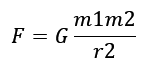
It accounted for the stability of planetary orbits, the motion of comets, and even the behavior of tides on Earth. Newton’s ability to describe these diverse phenomena with a single mathematical framework revealed a universe governed by precise, universal laws.[15]
Newton was struck by the harmony and regularity of the universe’s operation. His laws revealed a cosmos that operated with mathematical precision, where the interactions of objects followed consistent, predictable patterns. This regularity was not merely a scientific observation for Newton; it was also a source of profound philosophical and theological reflection.
In the General Scholium of the Principia, Newton famously expressed his belief that the universe’s order and coherence reflected the work of an intelligent Creator. He wrote:
“This most beautiful system of the sun, planets, and comets, could only proceed from the counsel and dominion of an intelligent and powerful Being.”
For Newton, the laws of nature were not arbitrary; they were finely tuned to ensure the stability and coherence of the cosmos. The gravitational force, for example, was precisely balanced to allow planets to maintain stable orbits around the Sun. If this force were slightly stronger or weaker, the delicate equilibrium necessary for the formation and sustenance of planetary systems would collapse. Newton interpreted this balance as evidence of divine design, seeing the universe as a testament to the wisdom and power of its Creator.
Newton’s insights had a profound impact on his contemporaries and subsequent generations of thinkers. His belief that the universe’s precision reflected divine design resonated deeply with the intellectual currents of the Enlightenment, particularly the movement of natural theology. Natural theology sought to understand God through reason and the observation of nature, emphasizing the regularity and order of the universe as evidence of a purposeful Creator.[16] [17]
Key aspects of Newton’s influence included:
- Theological Implications:
- Newton’s description of the universe as a “system” suggested an underlying intentionality and design. The precise calibration of natural laws, such as the inverse-square law of gravitation, seemed to many to point beyond nature to a divine architect.
- Scientific Inspiration:
- Newton’s work encouraged scientists to search for additional universal laws, operating under the assumption that nature was governed by consistent principles that could be discovered and understood. This faith in the rationality of the universe became a cornerstone of the scientific method.
- Philosophical Reflections:
- The harmony of Newton’s laws inspired philosophical speculation about why the universe is so ordered. Thinkers like William Paley later drew on Newton’s framework to develop arguments for intelligent design, particularly through the analogy of a watchmaker crafting a finely tuned mechanism.
Although Newton did not articulate the concept of fine-tuning as it is understood today, his work paved the way for later discussions of this idea. The precision of his laws highlighted the delicate balances necessary for the stability and coherence of the universe:
- The law of gravitation illustrated how slight changes in the force of gravity would disrupt the orbits of planets, destabilizing solar systems.
- His insights into the motion of celestial bodies emphasized the intricate interdependence of forces that allow the universe to function as a coherent whole.
In modern cosmology, these ideas have evolved into the recognition that physical constants—such as the gravitational constant (G), must fall within narrow ranges to permit the existence of complex structures like stars, planets, and life itself. Newton’s vision of a finely ordered cosmos thus anticipates the questions and themes that drive contemporary fine-tuning debates.
Isaac Newton’s contributions to science and philosophy represent a watershed moment in humanity’s understanding of the universe. His formulation of the laws of motion and universal gravitation revealed a cosmos governed by precise mathematical principles, characterized by harmony and regularity. Newton interpreted this precision as evidence of divine providence, linking the order of the natural world to the wisdom and power of a Creator.
Through his work, Newton not only transformed the study of the cosmos but also laid a foundation for later reflections on fine-tuning. The balance and interdependence of forces he described continue to inspire scientific inquiry and philosophical reflection, underscoring the profound significance of his legacy in the ongoing quest to understand the universe’s extraordinary precision.
The Scientific Revolution represented a pivotal moment in the history of fine-tuning. Through the works of Copernicus and Newton, the universe emerged as a system governed by precise, comprehensible laws, sparking debates about its origins and purpose. This era of groundbreaking scientific achievement provided the intellectual roots for modern fine-tuning arguments, even though modern arguments are grounded in cosmology and quantum physics discoveries.
The late 18th and early 19th centuries saw a flourishing of natural theology, a movement that sought to understand God through reason and the observation of nature. Among its most influential proponents was William Paley (1743–1805), whose work continues to shape discussions of design and purpose in the universe. In his seminal book, Natural Theology: or, Evidences of the Existence and Attributes of the Deity (1802), Paley presented his famous watchmaker analogy, one of the most enduring arguments for the existence of an intelligent designer.[18]
Paley invited his readers to engage in a thought experiment that has since become iconic. He asked them to imagine walking through a field and stumbling upon a watch lying on the ground. Unlike a stone, the watch’s intricate gears, precise movements, and purposeful design would immediately suggest that it was the product of intelligent craftsmanship. The watch’s complexity, functionality, and accurate timekeeping plausibly cannot be explained by chance. Instead, a watchmaker created it; someone with the skill and intention to design such an object.
Paley then extended this analogy to the natural world. He argued that just as the watch implies a watchmaker, the complexity and purposefulness observed in living organisms point to the existence of a divine Creator. For example, he marveled at the human eye, describing its intricate ability to:
- Focus light onto the retina for clear vision.
- Adjust to different distances, enabling a focus on both nearby and distant objects.
- Transmit visual information to the brain through the optic nerve.
Paley emphasized that such intricate functionality could not arise from random processes. Instead, it must reflect the deliberate design of an intelligent Creator, much like the watch reflects the work of a skilled watchmaker (Paley, 1802, pp. 1–10).
Paley based his argument on the limited biological knowledge of his time, which fell short of modern understandings of genetics and evolutionary biology. Nevertheless, his observations about the complexity of living organisms highlighted a profound sense of wonder about the natural world. He drew attention to numerous examples of what he perceived as purposeful design, such as:
- The intricate systems that sustain life, including respiration and circulation.
- The interdependence of organisms within ecosystems.
- The adaptation of species to their environments.
These examples served to reinforce Paley’s central claim: the natural world exhibits features that are best explained by an intelligent designer rather than by chance or necessity alone.
While Paley’s argument focused primarily on biological systems, its implications extended to broader considerations of the universe. We can see the natural world, with its apparent order and purpose, as analogous to a finely crafted, precisely and carefully designed machine. Paley’s reflections resonated with the earlier ideas of Isaac Newton, who had described the universe as a harmonious system governed by mathematical laws. Both thinkers saw evidence of design in the regularity and predictability of natural phenomena.
Although Paley did not explicitly address the fine-tuning of physical constants—such as the strength of gravity or the cosmological constant—his emphasis on the purposeful arrangement of nature laid important conceptual groundwork for later arguments about the universe’s apparent calibration for life. By underscoring the interconnectedness and functionality of the natural world, Paley contributed to the tradition of viewing the cosmos as a finely tuned system.
Paley’s Natural Theology enjoyed widespread readership and influence in religious and scientific circles. It inspired subsequent generations of thinkers to explore the intersection of science, philosophy and theology. However, it also faced criticism, particularly after the publication of Charles Darwin’s On the Origin of Species (1859), which provided a naturalistic explanation for the complexity and adaptation of living organisms through the process of natural selection. Despite these critiques, Paley’s argument remains a cornerstone of natural theology and a precursor to modern discussions of intelligent design and fine-tuning.
Key aspects of Paley’s legacy include:
- The Design Argument:
- Paley’s watchmaker analogy, illustrating how observed complexity points to a designer, remains central to discussions of the design argument.
- Influence on Fine-Tuning:
- Paley’s focus on the purposeful arrangement of biological systems foreshadowed modern arguments about the fine-tuning of the universe’s physical constants, even though his framework only included biological and ecological systems.
- Philosophical and Theological Debates:
- Paley’s work sparked debates about the nature of design, the plausibility of chance as an explanation for complexity, and the role of science in exploring ultimate questions about existence.
William Paley’s watchmaker analogy and broader reflections in Natural Theology remain a foundational contribution to the discourse on design and purpose in the universe. By highlighting the complexity and functionality of biological systems, Paley argued for the existence of a divine Creator, framing the natural world as evidence of intentional design. While his work predated modern discussions of fine-tuning, its emphasis on order and purpose resonates with contemporary debates about the origins and nature of the cosmos. Paley’s legacy endures as a testament to the enduring appeal of the design argument, inspiring both admiration and critique in the ongoing quest to understand the universe.
The optimism of natural theologians like William Paley, who saw the complexity and order of the natural world as evidence for a divine designer, was not without its critics. Among the most notable detractors was David Hume (1711–1776), a Scottish philosopher and skeptic renowned for his incisive critique of traditional arguments for the existence of God. In his work Dialogues Concerning Natural Religion (1779), Hume offered one of the most rigorous challenges to design arguments, questioning whether the order of the universe truly implied the existence of a designer.
Presented as a fictional dialogue between three characters (Cleanthes, Philo, and Demea) Hume’s Dialogues explored various perspectives on natural theology. Through this format, Hume dissected the design argument, raising objections that have resonated through centuries of philosophical discourse. His critiques addressed fundamental assumptions about analogy, causality, and the nature of divine agency, providing a foundation for later naturalistic explanations of the universe.
One of Hume’s central objections to the design argument was the problem of analogy. In Dialogues Concerning Natural Religion, Philo, the character representing Hume’s skeptical viewpoint, argued that comparing the natural world to human-made artifacts, such as a watch, was fundamentally flawed. While natural theologians like Paley saw the complexity of the universe as analogous to a machine crafted by an intelligent designer, Hume questioned whether this comparison was valid.
Philo contended that the universe is vastly different from any human creation. Machines like watches are the product of human experience, trial, and error, whereas the universe is unique and incomparable. Without direct experience of universe-making, Hume argued, any analogy between the two was speculative at best. He wrote:
“The world plainly resembles more an animal or a vegetable than it does a watch or a knitting-loom (Hume, 1779, Part II).”[19]
By emphasizing the dissimilarity between the universe and human artifacts, Hume challenged the very foundation of the design argument, suggesting that the inference of a designer based on analogy was unwarranted.
Hume also explored alternative explanations for the universe’s apparent order and complexity, proposing that these qualities might arise from chance or necessity rather than design. In Part V of the Dialogues, Philo speculated that given infinite time or a multiverse of possibilities, random arrangements of matter might eventually result in a stable, ordered system:
“A finite number of particles is only susceptible of finite transpositions; and it must happen, in an eternal duration, that every possible order or position must be tried an infinite number of times” (Hume, 1779, Part V).
This argument foreshadowed ideas later explored in modern cosmology, such as the multiverse hypothesis, which posits the existence of countless universes with varying properties. According to this view, our universe’s order and life-permitting conditions could be the result of chance, as we happen to inhabit one of the rare universes where such conditions prevail.
Hume’s emphasis on chance and necessity as plausible alternatives to design introduced a naturalistic framework for understanding the universe, undermining the exclusivity of the design argument.
A third key objection raised by Hume was his critique of anthropomorphism, or the tendency to attribute human-like qualities to a divine designer. In Part VII of the Dialogues, Philo argued that applying human characteristics, such as intelligence or craftsmanship, to a divine being limits our understanding of the divine and risks projecting our own limitations onto something that is, by definition, transcendent:
“By asserting that the world arose from something similar to human intelligence and design, you diminish the greatness of the divine, rendering it too human and too familiar” (Hume, 1779, Part VII).
Hume suggested that any attempt to describe the divine in human terms is inherently flawed, as it reduces the infinite and unknowable nature of a Creator to the constraints of human experience. This critique not only challenged the design argument, but also questioned broader theological assumptions about the nature of God.
Despite his skepticism, Hume did not dismiss the complexity and order of the universe outright. He acknowledged that the apparent harmony of natural phenomena could evoke a sense of wonder and that the design argument had an intuitive appeal. However, he maintained that this appeal was insufficient as proof of a designer, given the availability of alternative explanations and the inherent limitations of human understanding.
Hume’s critiques laid the groundwork for later developments in science and philosophy, including Darwinian evolution, which provided a naturalistic explanation for the complexity and adaptation of living organisms, and modern cosmological theories such as the multiverse. His insistence on scrutinizing the assumptions underlying the design argument continues to influence contemporary debates about the origins and nature of the universe.
David Hume’s critique of the design argument in Dialogues Concerning Natural Religion represents a landmark in the history of philosophical thought. By challenging the validity of analogies between human artifacts and the universe, proposing alternative explanations rooted in chance and necessity, and critiquing the anthropomorphic tendencies of natural theology, Hume dismantled key elements of the design argument. His insights not only shaped subsequent critiques of natural theology, but also laid the foundation for modern naturalistic approaches to understanding the cosmos. While the design argument has evolved in response to Hume’s objections, his work remains a cornerstone of philosophical inquiry into the relationship between order, complexity, and causality in the universe.
The 20th century marked a transformative period in the study of the cosmos, driven by groundbreaking discoveries in physics and astronomy. During this time, the concept of fine-tuning began to take shape, as scientists uncovered the precise conditions and constants necessary for the existence of a life-permitting universe. The contributions of figures like Albert Einstein, Edwin Hubble, Fred Hoyle, and the formulation of the Anthropic Principle played pivotal roles in shaping modern discussions of fine-tuning.
In 1915, Albert Einstein (1879–1955) revolutionized our understanding of gravity with his field equations in the theory of General Relativity. These equations describe how mass and energy warp the fabric of spacetime, influencing the motion of objects. However, Einstein’s initial formulation included a term known as the cosmological constant (Λ), which he introduced to counterbalance the gravitational pull of matter and achieve a static universe, a view widely accepted at the time.[20]
When Edwin Hubble later discovered the universe’s expansion, Einstein famously called the introduction of the cosmological constant his “greatest blunder.” Yet, this constant re-emerged as a critical parameter in fine-tuning discussions. In modern cosmology, scientists understand the cosmological constant as a measure of the energy density of empty space, or “dark energy.” Its value is astonishingly small but nonzero, if it were even slightly larger, the universe would have expanded too rapidly for galaxies, stars, or planets to form. Conversely, if it were smaller or negative, the universe would have collapsed upon itself shortly after the Big Bang.[21]
Einstein’s cosmological constant thus became a cornerstone in discussions of the fine-tuning required for a stable, life-permitting universe.
In 1929, Edwin Hubble (1889–1953) made a discovery that fundamentally altered our understanding of the cosmos: the universe is expanding. By analyzing the redshift of light from distant galaxies, Hubble demonstrated that galaxies are moving away from each other, implying that the universe had a beginning, a point of origin now known as the Big Bang.
Hubble’s discovery raised profound questions about the initial conditions of the universe. If the cosmos began as an incredibly hot and dense point, what factors allowed it to evolve into a structure capable of supporting life? The Hubble constant governed the universe’s expansion rate, requiring precise calibration. A slightly faster rate would have dispersed matter too quickly for galaxies and stars to form, while a slower rate would have caused the universe to collapse back into a singularity. This delicate balance highlighted the first hints of cosmological fine-tuning.[22]
In 1954, Fred Hoyle (1915–2001) uncovered one of the most remarkable examples of fine-tuning within stellar processes. Hoyle studied the formation of carbon, an element essential for life, during nuclear fusion in stars. He discovered that the production of carbon relies on a precise resonance in the energy levels of the carbon-12 nucleus. This resonance increases the probability of carbon formation by a factor of thousands, enabling stars to produce sufficient quantities of the element.
Hoyle famously remarked that this improbable resonance “seemed to involve a deliberate adjustment,” suggesting the presence of an underlying intelligence or design. While Hoyle himself was not a theist, his discovery became a powerful piece of evidence in fine-tuning discussions, as it underscored the extraordinary precision of the physical constants and laws governing the universe.[23]
In the 1970s, physicist Brandon Carter introduced the Anthropic Principle, which provided a philosophical framework for understanding fine-tuning. The principle states that the universe’s physical constants and laws must be compatible with the existence of observers like us. Carter emphasized that the precise conditions enabling life were not random, but necessary for our presence to observe them.
The Anthropic Principle is often divided into two forms:
- Weak Anthropic Principle (WAP): Observational selection effects imply that we can only observe conditions suitable for life because we exist in such conditions.
- Strong Anthropic Principle (SAP): Suggests that the universe’s laws and constants are tailored to produce life, implying purpose or design.
The principle sparked debate, with some interpreting it as evidence for a designer and others seeing it as a naturalistic explanation for fine-tuning. It also motivated alternative theories, such as the multiverse hypothesis, which posits that countless universes exist with varying physical constants, and we inhabit one compatible with life.[24]
The 20th century’s discoveries transformed fine-tuning from a philosophical speculation into a scientific and cosmological inquiry. Key advancements included:
- The recognition of precise parameters, such as the cosmological constant and the resonance in nuclear reactions, necessary for life.
- The framing of fine-tuning as an essential question in the intersection of science, philosophy, and theology.
- The development of theoretical frameworks like the Anthropic Principle to interpret these discoveries.
These contributions set the stage for modern fine-tuning arguments, which continue to explore whether the universe’s extraordinary precision reflects chance, necessity, or design.
The emergence of fine-tuning in 20th-century cosmology highlights humanity’s deepening understanding of the universe’s intricate structure. From Einstein’s cosmological constant to Hubble’s expanding universe, Hoyle’s carbon resonance, and Carter’s Anthropic Principle, each discovery has illuminated the delicate balance of conditions required for life. While the interpretation of fine-tuning remains a subject of vigorous debate, its implications continue to inspire awe and wonder about the origins and purpose of the cosmos.
The late 20th and early 21st centuries saw the fine-tuning argument rise to prominence, driven by discoveries in cosmology and physics, as well as philosophical reflections on their implications. Scientists and philosophers identified and analyzed the precise constants and conditions required for a life-permitting universe, framing fine-tuning as one of the most compelling questions at the intersection of science, philosophy, and theology.
Modern discussions of fine-tuning focus on the extraordinary precision of various physical constants and parameters, which govern the behavior of the universe. Scientists have identified several key constants that must fall within narrow ranges to allow for the existence of stars, planets, and life:
- The Strength of Gravity:
- The gravitational constant (G) determines the strength of the force between masses. If gravity were slightly stronger, stars would burn out too quickly, collapsing into black holes. If it were weaker, stars might not form at all, and the universe would lack the necessary conditions for life.[25]
- The Cosmological Constant (Λ):
- The cosmological constant represents the energy density of empty space, often referred to as “dark energy.” Its value is astonishingly small but nonzero. If it were even slightly larger, the universe’s expansion would accelerate too rapidly, preventing the formation of galaxies and stars. A smaller value would lead to gravitational collapse.[26]
- The Ratio of Electromagnetic to Gravitational Force:
- This ratio determines the stability of atomic structures. If the electromagnetic force were only marginally stronger relative to gravity, stars would be unable to fuse hydrogen into helium, halting the production of heavier elements like carbon. Conversely, if it were weaker, stars would fail to ignite.[27]
The improbability of these constants aligning within the narrow ranges necessary for life has driven many scientists and philosophers to explore potential explanations for fine-tuning, ranging from chance and necessity to intelligent design.
The fine-tuning argument gained significant attention in the late 20th century through the work of scientists and thinkers such as Paul Davies, John Barrow, and Frank Tipler. Their influential book, The Anthropic Cosmological Principle (1986), provided a comprehensive examination of the universe’s apparent fine-tuning and introduced the Anthropic Principle into broader scientific and philosophical discourse.
- Paul Davies: A physicist and author, Davies has argued that the precision of the universe’s constants points to a “providential aspect” of the cosmos. In works like The Goldilocks Enigma (2006), he explored whether fine-tuning implies purpose and meaning in the universe, engaging both scientific and theological perspectives.[28]
- John Barrow and Frank Tipler: In The Anthropic Cosmological Principle, Barrow and Tipler outlined how the universe’s physical constants appear exquisitely tailored for the emergence of life. They proposed that the anthropic principle could serve as a framework for understanding this precision, though interpretations varied from naturalistic to theistic.
Their work helped popularize the fine-tuning argument, presenting it as a profound challenge for naturalistic explanations of the cosmos.
Modern philosophers, such as William Lane Craig and Robin Collins, have made fine-tuning a cornerstone of the Teleological Argument, the argument for God’s existence based on design and purpose in the universe.
- William Lane Craig:
- Craig has argued that the fine-tuning of the universe provides strong evidence for the existence of a designer. In debates and writings, such as Reasonable Faith, Craig emphasizes the improbability of the constants’ values arising by chance, highlighting fine-tuning as one of the strongest arguments in contemporary apologetics.[29]
- Craig also critiques alternative explanations, such as the multiverse hypothesis, arguing that they fail to account for the specified complexity of fine-tuning.
- Robin Collins:
- Collins is a leading advocate of the fine-tuning argument in philosophy. He frames fine-tuning as a case of “design inference,” drawing parallels to instances of specified complexity in human artifacts. In his essays, such as “The Fine-Tuning Argument: A Scientific Argument for the Existence of God,” Collins defends the idea that an intelligent designer is the best explanation for the universe’s life-permitting conditions.[30]
Their work bridges scientific findings with philosophical reasoning, making fine-tuning a central theme in discussions about the relationship between science and theology.
The remarkable precision of the universe’s constants has prompted naturalistic explanations to counter the design argument:
- Chance: Some argue that the universe’s fine-tuning is a coincidence, though the improbability of this explanation makes it unsatisfactory to many scientists and philosophers.
- Necessity: Others suggest that the constants are not contingent but must have their observed values due to some deeper, unknown principle of physics.
- Multiverse Hypothesis: Perhaps the most popular alternative, the multiverse hypothesis posits that countless universes exist, each with different values for physical constants. We inhabit one of the rare universes where conditions are suitable for life. While this explanation avoids invoking a designer, it faces challenges, such as the lack of empirical evidence and the “fine-tuning” required for the multiverse-generating mechanism itself.[31]
Modern discussions of fine-tuning illuminate one of the most profound questions in science and philosophy: why does the universe appear so precisely calibrated for life? The work of scientists like Davies, Barrow, and Tipler, alongside philosophers such as Craig and Collins, has elevated fine-tuning to a central position in debates about the origins and nature of the cosmos. Whether interpreted as evidence of divine design, a feature of a multiverse, or an unexplained mystery, fine-tuning continues to inspire awe and inquiry, bridging the realms of science, philosophy, and theology.
The concept of fine-tuning is bolstered by significant scientific discoveries that have shaped our understanding of the universe’s origins, structure, and capacity to support life. From the Big Bang theory to the multiverse hypothesis and advances in astrobiology, these developments provide a foundation for the fine-tuning argument while also sparking debates about its implications.
1. Big Bang Cosmology and the Precision of Initial Conditions
The discovery that the universe had a beginning—often referred to as the Big Bang, was a monumental scientific achievement of the 20th century. Evidence for this event came from the detection of cosmic microwave background (CMB) radiation in 1964 by Arno Penzias and Robert Wilson. This faint glow, a relic of the universe’s earliest moments, confirmed that the cosmos had expanded from an extremely hot and dense state approximately 13.8 billion years ago.
Big Bang cosmology underscores the extraordinary precision of the universe’s initial conditions. For example:
- The density of matter and energy at the universe’s inception had to be finely balanced. A slightly higher density would have caused the universe to collapse under its own gravity, while a lower density would have led to perpetual expansion, preventing the formation of galaxies and stars.[32]
- The entropy level of the early universe was extraordinarily low, a state essential for the development of complex structures over time.[33]
These precise initial conditions align with the concept of fine-tuning, as they suggest that the universe’s structure and evolution were not random but highly specific to support life.
2. Multiverse Hypothesis: A Naturalistic Alternative
The apparent fine-tuning of the universe’s physical constants and initial conditions has led some scientists to propose the multiverse hypothesis as an alternative explanation. According to this idea, our universe is just one of countless universes within a larger multiverse, each with its own set of physical constants and laws.
Key points about the multiverse hypothesis include:
- Random Variation: In this framework, universes form with random variations in their constants. The vast majority are unsuitable for life, but by chance, a few, like ours, exhibit the fine-tuning necessary for observers to exist.[34]
- Inflationary Cosmology: The multiverse concept is often linked to eternal inflation, a theory suggesting that quantum fluctuations during the rapid expansion of the early universe produced separate “bubble universes” with distinct properties.[35]
While the multiverse hypothesis offers a naturalistic explanation for fine-tuning, it faces challenges, such as the lack of direct empirical evidence and the fine-tuning required for the mechanism that generates the multiverse itself. Critics argue that the hypothesis may not fully eliminate the question of why our universe permits life but merely shifts it to a broader context.
3. Advances in Astrobiology and the Uniqueness of Earth
The burgeoning field of astrobiology has provided valuable insights into the conditions necessary for life, emphasizing the rarity and complexity of environments capable of supporting living organisms.
Astrobiological research highlights several factors that make Earth uniquely suited for life:
- Planetary Distance from the Star:
- Earth resides in the habitable zone, a region around the Sun where temperatures allow for liquid water, a critical ingredient for life.[36]
- Stable Atmosphere and Magnetic Field:
- Earth’s magnetic field protects the planet from harmful solar radiation, while its atmosphere provides essential gases like oxygen and nitrogen, along with a greenhouse effect that stabilizes surface temperatures.
- Planetary Composition and Size:
- Earth’s size is ideal for retaining an atmosphere without experiencing excessive gravitational compression, and its composition provides essential elements for life, such as carbon and nitrogen.
Astrobiological studies of exoplanets further reinforce the fine-tuning argument by highlighting the vast number of planets that lack these life-permitting conditions. The more we learn about other planetary systems, the more unique Earth appears in its ability to sustain complex organisms.
These scientific advances collectively reinforce the notion that the universe’s life-permitting characteristics are highly specific and improbable:
- Big Bang Cosmology underscores the precise initial conditions required for the universe to develop into its current state.
- The Multiverse Hypothesis offers a potential explanation for fine-tuning without invoking design, though it remains speculative and controversial.
- Astrobiology reveals the rarity of environments like Earth, deepening the mystery of why our planet exists in such a finely balanced state.
Whether interpreted as evidence of design, the result of chance, or the product of a multiverse, these advances have elevated fine-tuning to one of the most profound questions in science and philosophy.
Key scientific advances have illuminated the extraordinary precision of the universe’s conditions and constants, fueling the fine-tuning debate. Big Bang cosmology highlights the exacting requirements of the universe’s origins, the multiverse hypothesis challenges design arguments with a naturalistic framework, and astrobiology underscores the rarity of life-permitting environments. Together, these insights provide a rich foundation for ongoing exploration of one of humanity’s most compelling mysteries: the nature and origin of the universe’s fine-tuning.
The concept of fine-tuning has emerged as one of the most profound and contentious topics in science and philosophy. It refers to the extraordinary precision in the physical laws and constants that govern the universe, which appear to be exquisitely calibrated to allow for the existence of life. Whether in the realms of nuclear physics, cosmology, or molecular biology, fine-tuning has sparked vigorous debates between proponents of naturalistic explanations, such as the multiverse hypothesis, and those advocating theistic interpretations, such as intelligent design.
At its core, the significance of fine-tuning lies in the improbability of the universe’s physical constants and laws being so precisely calibrated for life. These constants include:
- The Gravitational Constant (G): Determines the strength of gravity. A slight change would either cause stars to collapse into black holes or prevent them from forming altogether.[37]
- The Cosmological Constant (Λ): Dictates the rate of the universe’s expansion. Its value is so small and precise that Nobel laureate Steven Weinberg described it as “unnaturally tiny.”[38]
- The Strength of Electromagnetic Force: Crucial for atomic structure. A small variation would destabilize matter, making life impossible.[39]
Such precision suggests that life-permitting conditions are not a generic feature of possible universes but an anomaly, raising questions about why the universe is so finely tuned.
Naturalistic interpretations of fine-tuning argue that the universe’s life-permitting conditions are the result of either chance or necessity, often invoking the multiverse hypothesis as an explanatory framework.
- The Multiverse Hypothesis:
- This hypothesis posits that our universe is one of countless universes, each with its own set of physical constants. In this vast ensemble, it is not surprising that at least one universe (ours) possesses the conditions necessary for life.[40]
- While the multiverse offers a naturalistic alternative to design, it faces criticism for being speculative and lacking empirical evidence. Additionally, the mechanism that generates the multiverse itself may require fine-tuning, perpetuating the problem rather than solving it.[41]
- Necessity:
- Another naturalistic explanation suggests that the universe’s constants are not contingent but dictated by some deeper, as-yet-undiscovered laws of physics. Proponents argue that once these laws are understood, fine-tuning may no longer appear remarkable.[42]
- However, this explanation remains hypothetical, as no such underlying principles have been identified.
Theistic proponents argue that fine-tuning provides compelling evidence for the existence of an intelligent designer. The universe’s precise calibration is viewed as intentional, reflecting a mind behind its creation.
- Intelligent Design:
- Advocates like William Lane Craig and Robin Collins assert that the best explanation for fine-tuning is design. They argue that the improbability of the constants arising by chance or necessity makes a theistic interpretation more plausible.[43]
- Anthropic Principle and Theism:
- While the Anthropic Principle explains that the universe must have conditions suitable for life because we exist to observe it, theists often go further, arguing that this compatibility suggests purpose rather than mere coincidence.[44]
Fine-tuning has profound implications for both scientific inquiry and philosophical reflection:
- Scientific Inquiry:
- The study of fine-tuning pushes the boundaries of cosmology, physics, and astrobiology, prompting deeper questions about the origins and structure of the universe.
- It also encourages interdisciplinary exploration, as scientists collaborate with philosophers and theologians to interpret the data.
- Philosophical Reflection:
- Fine-tuning challenges traditional naturalistic worldviews, forcing a re-evaluation of the assumptions underpinning explanations of the universe’s origins.
- It also invites philosophical debates about the nature of reality, the possibility of purpose, and the role of metaphysics in scientific discourse.
The concept of fine-tuning inspires awe and wonder about the nature of the cosmos. Whether viewed as evidence of a multiverse, the necessity of physical laws, or the handiwork of a designer, fine-tuning captures the human imagination and drives our quest for understanding. Its implications transcend the boundaries of disciplines, offering insights into some of the deepest questions about existence and our place in the universe.
The significance of fine-tuning lies in its ability to bridge the realms of science, philosophy, and theology, sparking debates about the origins and purpose of the cosmos. While naturalistic explanations emphasize chance or necessity, theistic interpretations highlight the possibility of intelligent design. Regardless of the perspective, fine-tuning remains a testament to the extraordinary precision of the universe, inspiring both scientific exploration and philosophical contemplation.
[1] Guthrie, W. K. C. (1965). A History of Greek Philosophy: Volume 2, The Presocratic Philosophers. Cambridge University Press.
[2] Plato. Timaeus. Hackett Publishing Company, 2000.
[3] Aristotle. Physics. Oxford University Press, 1984.
[4] Davies, B. (1992). The Thought of Thomas Aquinas. Oxford University Press.
[5] Kretzmann, N. (1997). The Cambridge Companion to Aquinas. Cambridge University Press.
[6] Aquinas, T. (1947). Summa Theologica. Benziger Bros.
[7] Aquinas, T. (1924). Summa Contra Gentiles. Translated by J. Rickaby. Burns, Oates & Washbourne.
[8] Ibid. 4.
[9] Ibid. 5.
[10] Ibid. 4.
[11] Copernicus, N. (1543). De revolutionibus orbium coelestium [On the Revolutions of the Heavenly Spheres]. Nuremberg: Johannes Petreius.
[12] Ibid. 11.
[13] Newton, I. (1687). Philosophiæ Naturalis Principia Mathematica. Royal Society.
[14] Westfall, R. S. (1980). Never at Rest: A Biography of Isaac Newton. Cambridge University Press.
[15] Ibid. 13.
[16] Paley, W. (1802). Natural Theology: Or, Evidences of the Existence and Attributes of the Deity. Oxford University Press, 2008.
[17] Kuhn, T. S. (1957). The Copernican Revolution: Planetary Astronomy in the Development of Western Thought. Harvard University Press.
[18] Ibid. 16.
[19] Hume, D. (1779). Dialogues Concerning Natural Religion. Oxford University Press, 1998.
[20] Einstein, A. (1917). Cosmological Considerations in the General Theory of Relativity. Sitzungsberichte der Königlich Preußischen Akademie der Wissenschaften (Berlin), 142–152.
[21] Weinberg, S. (1987). Anthropic Bound on the Cosmological Constant. Physical Review Letters, 59(22), 2607–2610.
[22] Hubble, E. (1929). A Relation Between Distance and Radial Velocity Among Extra-Galactic Nebulae. Proceedings of the National Academy of Sciences, 15(3), 168–173.
[23] Hoyle, F. (1954). The Synthesis of the Elements from Hydrogen. Astrophysical Journal Supplement Series, 1, 121–146.
[24] Barrow, J. D., & Tipler, F. J. (1986). The Anthropic Cosmological Principle. Oxford University Press.
[25] Rees, M. (1999). Just Six Numbers: The Deep Forces That Shape the Universe. Basic Books.
[26] Ibid. 21.
[27] Ibid. 24.
[28] Ibid. 4.
[29] Craig, W. L. (2008). Reasonable Faith: Christian Truth and Apologetics (3rd ed.). Crossway Books.
[30] Collins, R. (2009). The Fine-Tuning Argument: A Scientific Argument for the Existence of God. In W. L. Craig & J. P. Moreland (Eds.), The Blackwell Companion to Natural Theology. Blackwell Publishing.
[31] Ibid, 25.
[32] Hawking, S., & Ellis, G. F. R. (1973). The Large Scale Structure of Space-Time. Cambridge University Press.
[33] Penrose, R. (1989). The Emperor’s New Mind: Concerning Computers, Minds, and the Laws of Physics. Oxford University Press.
[34] Ibid, 25.
[35] Guth, A. (2007). The Inflationary Universe: The Quest for a New Theory of Cosmic Origins. Basic Books.
[36] Kasting, J. F., Whitmire, D. P., & Reynolds, R. T. (1993). Habitable Zones Around Main Sequence Stars. Icarus, 101(1), 108–128.
[37] Ibid, 25.
[38] Ibid. 21.
[39] Ibid. 24.
[40] Tegmark, M. (2004). Parallel Universes. Scientific American, 290(5), 40–51.
[41] Ibid. 30.
[42] Ibid. 4.
[43] Ibid. 29.
[44] Ibid. 24.